
2026 WBG Short Course
Our annual WBG Short Course was held Feb. 3-5, 2026. The course was presented online in real-time and included opportunities for Q&A with the instructors.
Course Objectives
- Provided instruction on the fundamentals of SiC and GaN materials, device fabrication and reliability, and power electronics applications.
- Participants gained proficiency through instruction on WBG fundamentals and application-specific case studies.
Event Sponsor

Speakers
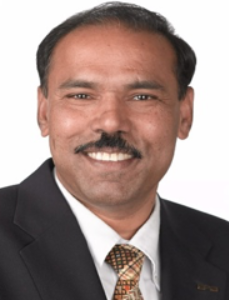
Ram Adapa
Technical Executive
EPRI
Topic: Role of Wide Band Gap power electronic devices in Power Grid Modernization with Renewables
- Power Grid Architectures with renewable generation
- Meeting the power requirements for new loads such as AI data centers
- WBG device power requirements for Power Grid applications
- Future R&D needs for Power Grid Modernization and the role of WBG power electronics
Biography
Dr. Ram Adapa is a technical executive in EPRI’s power delivery and utilisation sector. His research activities focus on HVDC transmission, flexible AC transmission systems (FACTS), custom power and fault current limiters. He is a technical authority in these areas. Dr. Ram Adapa is an IEEE Fellow and has been honoured several times by IEEE for his outstanding contributions to the profession. He received the 2016 IEEE PES Nari Hingorani Custom Power Award and 2023 IEEE PES Uno Lamm High Voltage Direct Current (HVDC) Award.
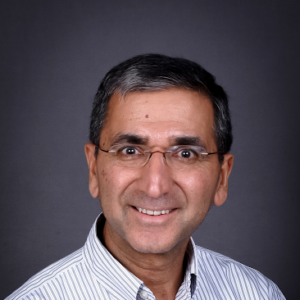
Sandeep Bahl
Distinguished Member of Technical Staff
Texas Instruments
Topic: Reliable GaN FETS for Power Supply Applications
- Motivation for the GaN FET
- The meaning of traditional qualification—what does and does not carry over from Si reliability
- Intrinsic reliability of the GaN FET—dynamic Ron, TDDB & hot-carrier wearout
- Achieving application-reliable GaN: a mission profile approach and JEDEC JEP180
- Surge robustness without avalanche
Biography
Sandeep Bahl has a solid industry track record in semiconductor technologies. He is focusing on the ramp and acceleration of GaN technology, to bring reliable power electronics products to market. Since traditional reliability testing does not cover use cases of power electronics, he has developed methodologies to know that GaN products will be reliable in all kinds of applications. He works with customers to understand their use-cases, assesses the operational impact of the system-level stresses on devices, and drives efforts across technology teams to assure high-quality parts.
Sandeep played a key role in the GaN industry standardization effort, which led to the formation of the JEDEC JC70 committee and the increasing market adoption of GaN. He serves as co-chair of the JC70 GaN reliability task group and led the first JEDEC GaN reliability guideline, JEP180. He co-founded TI’s GaN product line and co-invented TI’s direct-drive GaN architecture. Sandeep has a PhD from MIT and is a distinguished member of technical staff at TI.

Elif Balkas
Chief Technology Officer
Wolfspeed
Topic: Silicon Carbide Substrates: Advantages, Challenges and Solutions
- Motivation for SiC
- SiC advantages in power electronics
- SiC substrate technologies and processing
- SiC defects, surface quality, flatness
Biography
As Chief Technology Officer at Wolfspeed, Dr. Elif Balkas is responsible for building upon the company’s strong technology foundation in wide bandgap (WBG) materials, driving technological improvements and coupling them with manufacturing excellence to yield products with high quality and reliability as Wolfspeed continues to grow as the leader in Silicon Carbide (SiC) and gallium nitride (GaN) materials for power and RF device applications.
Elif has more than 20 years of experience in the WBG materials field in the technology industry. Prior to her current role at Wolfspeed, she served in variety of leadership positions in R&D and operations, dedicating most of her time to developing Silicon Carbide crystal growth and surrounding technologies that are scalable for manufacturing purposes and that enable more efficient and powerful electronic systems.
Prior to Wolfspeed, Elif served as a scientist at Intrinsic Semiconductor where she was responsible for GaN and Silicon Carbide epitaxy products development with a focus on high-quality, efficient and effective processes.
Elif co-founded the Women’s Initiative at Wolfspeed to encourage, develop and support women who will lead the way in innovation and execution in every aspect of the business and community, and served as the leader of the Professional Development Focus to create an environment where everyone’s perspectives, ideas and contributions matter. She continues to serve on the Women’s Initiative Steering Committee to foster diversity at all levels to create better results for Wolfspeed and its community.
Elif has a Ph.D. in Materials Science with a minor in Electrical and Computer Engineering. She earned her degree from North Carolina State University in GaN crystal growth via physical vapor transport. Elif also completed executive education at The Wharton School, focusing on product management and strategy, scaling a business, and leadership development.

Peter Friedrichs
Vice President of SiC
Infineon Technologies
Topic: Wide Band Gap Semiconductors and their impact in existing as well as Emerging Power Electronics Applications
- Introduction into the new landscape of power electronics
- Impact of WGB devices on energy saving and meeting power density targets
- Novel WBG components as enabler of new applications
- Device system interface as key to leverage WBG potentials
- Powering AI as huge upcoming opportunity
Biography
Dr. Peter Friedrichs was born in 1968 in Aschersleben, Germany. After achieving his Dipl.-Ing. in microelectronics from the Technical University of Bratislava in 1993, he started Ph.D work at the Fraunhofer Institut FhG-IIS-B in Erlangen. His focus area of expertise was the physics of the MOS interface in SiC power MOSFETs. In 1996 he joined the Corporate Research of Siemens AG and was involved in the development of power switching devices on SiC, mainly power MOSFETs and vertical junction FETs. On March 1st, 2000, Dr. Peter Friedrichs joined SiCED GmbH & Co. KG, a joint venture of Siemens and Infineon that originated from the former Siemens research group. Starting in July 2004, he was the managing director of SiCED, responsible for all technical issues. In 2009 Dr. Friedrichs achieved the Dipl.-Wirt.-Ing. from the University of Hagen. After the integration of SiCED’s activities into Infineon, he joined Infineon as Senior Director Silicon Carbide from April 1st, 2011, and is now Vice President of SiC at Infineon Technologies.
Dr. Friedrichs is a member of the ECPE board and acts as co-chair for the JEDEC JC70.2 committee. He holds numerous patents in the field of SiC power devices and technology and is an author or co/author of more than 50 scientific papers and conference contributions.

Don Gajewski
Senior Director of the Reliability Engineering & Failure Analysis Department
Wolfspeed
Topic: SiC Power Device Reliability
- Intrinsic reliability failure mechanisms & models
- Dynamic reliability – new methods & results
- Radiation hardness – terrestrial neutrons
- Product-level qualification & reliability
- Reliability for high voltage and high humidity environments
- Industry consortia guidelines & standards development
Biography
Dr. Donald A. Gajewski is the Senior Director of the Reliability Engineering & Failure Analysis Department for Wolfspeed, Inc., covering GaN-on-SiC HEMT-MMICs for RF and microwave applications, SiC power MOSFETs, SiC Schottky power diodes, and SiC power modules. He has been in the semiconductor industry reliability profession for 21 years, with previous tenures at Nitronex, Freescale and Motorola. He has experience with other semiconductor technologies including highly integrated silicon CMOS including SiGe HBT and SmartMOS; magnetoresistive random access memory (MRAM); and advanced packaging including flip-chip and redistributed chip package (RCP). He completed a National Research Council Postdoctoral Research Fellowship at the National Institute of Standards and Technology, in the Semiconductor Electronics Division, in Gaithersburg, MD. He earned the Ph.D. in physics from the University of California, San Diego, partially under the auspices of a National Science Foundation Fellowship.

Brian Heber
Director of Engineering
Vertiv
Topic: Advancing Wide Bandgap Power Electronics: SiC and GaN Innovations for Next-Generation Energy Systems
- Today’s Architectures
- Future Architectures
- Challenges vs. Benefits
- Market Adoption & Future Gazing
Biography
Brian Heber is an engineering leader with over 27 years of experience in power electronics, embedded systems, and global product development for the data center industry. As Director of Engineering at Vertiv, he has led cross-functional teams worldwide, driving innovation of power infrastructure products. Brian is an inventor on over 25 patents. He has a Master’s degree in Electrical Engineering from The Ohio State University. His career is defined by technical excellence, project leadership, and a commitment to developing high-performing teams.

Thomas Jahns
Grainger Professor Emeritus of Power Electronics and Electric Machines
University of Wisconsin-Madison
Topic: Monolithic GaN Bidirectional Switches: Where to Apply Them and How
- Matrix and cycloconverter-type single-stage converters
- Vienna rectifiers and T-type multi-level inverters
- Current source inverters/converters
- BD device switch states and gate drive technology
- Four-step commutation sequence and simplifications
Biography
Prof. Thomas M. Jahns received his bachelors, masters, and doctoral degrees in electrical engineering from MIT, Cambridge, MA (USA).
Dr. Jahns joined the faculty of the University of Wisconsin – Madison (USA) in 1998 as a Grainger Professor of Power Electronics and Electric Machines in the Department of Electrical and Computer Engineering. He is a Co-Director of the Wisconsin Electric Machines and Power Electronics Consortium (WEMPEC), a university/industry consortium with over 85 international sponsors.
Prior to UW-Madison, Dr. Jahns worked at GE Corporate Research and Development in Niskayuna, NY (USA) for 15 years, where he pursued new power electronics and motor drive technology in a variety of research and management positions. His current research interests at UW-Madison include electric vehicle propulsion, renewable energy systems, microgrids, and energy storage.
Dr. Jahns is a Fellow of IEEE. He received the 2005 IEEE Nikola Tesla Technical Field Award “for pioneering contributions to the design and application of AC permanent magnet machines”. Dr. Jahns is a Past President of the IEEE Power Electronics Society and the recipient of the 2011 Outstanding Achievement Award presented by the IEEE Industry Applications Society. He was elected to the US National Academy of Engineering in 2015.

Eric Carlson
Senior Lead Scientist
Booz Allen Hamilton
Topic: Gallium Nitride and Related Materials – Device Processing and Materials Characterization for Power Electronics Applications
- GaN material properties for power applications
- Bulk GaN substrates and epitaxial growth
- Selective area p-type GaN doping
- Vertical GaN power devices
- Novel material characterization for GaN power devices
- Future WBG directions and impact on critical applications
Biography
Eric P. Carlson is currently a Senior Lead Scientist at Booz Allen Hamilton where he supports the DOE’s Advanced Research Projects Agency-Energy (ARPA-E) as a technical support contractor. Prior to joining Booz Allen Hamilton, he served 12 years as a Research Specialist in the Compound Semiconductor Solutions Division at Dow Corning Corporation where he developed crystal growth, epitaxy, and characterization of wide band gap semiconductor materials. Before joining Dow Corning Corporation, Dr. Carlson served as the Director of GaN R&D at Kyma Technologies where he developed growth processes of bulk GaN wafers. Dr. Carlson is the author and co-author of more than 50 publications and holds 6 patents. He received his B.S. and Ph.D. in materials science and engineering from North Carolina State University in 1993 and 2001, respectively.

Johann W. Kolar
Professor
ETH Zürich
Topic: Next-Generation Bidirectional GaN/SiC Switch Power Electronics
- Basic Properties and Multi-Step Commutation of Bidirectional Switches
- T-Type Voltage Source and Current Source Variable Speed Motor Drives
- Ultra-Compact Bidirectional Three-Phase EV Chargers
- Ultra-Efficient AI Datacenter Power Supplies
- Single-Stage MVAC/LVDC Solid-State Transformers
- Solid-State Circuit Breakers
Biography
Prof. Johann W. Kolar is an internationally acclaimed researcher and a towering figure in the field of power electronic systems. He is regarded as the “father” of high-frequency multi-phase AC/DC converter technology, which finally allowed the electronic linking of the AC and DC electric power distribution empires created by Thomas A. Edison and George Westinghouse. Early on, he saw the critical importance of power electronic converters and pursued a vigorous research program laying the foundation for research on high-power quality, compact, and efficient rectifier systems. In 1993, he invented the Vienna Rectifier (VR), which has since become a standard solution for high-efficiency datacenter power supply and, in its bidirectional extension, for the integration of solar power into the AC grid. Kolar was also among the first to propose and develop partly phase-modular three-phase AC/DC converter systems, the preferred approach for today´s onboard electric vehicle (EV) battery chargers. He also developed the X-Rectifier concept, another groundbreaking invention with large potential to enable major applications, including the interconnection of local DC-microgrids to three-phase AC mains. For the past two decades, Kolar has spearheaded research on quasi-single-stage isolated AC/DC converter systems and Solid-State Transformers (SSTs), paving the way for the next generation of medium-voltage power supplies for hyperscale data centers. Kolar continues to make extraordinary contributions to power electronics and power conversion technologies, placing him among the rare global visionaries helping shape the future of the electricity industry and energy technologies.

David Levett
Consultant
Topic: Paralleling SiC MOSFETs
- Overview of the challenges of paralleling SiC MOSFETs
- Power layout optimization
- Gate drive design guidance
- Converter testing for reliable operation in the field
Biography
Dr. David Levett has 35 years of power electronics design experience in applications ranging from drives to alternative energy, and since 2022 has been power electronics architect for Rockwell Automation. From 2008 to 2022, he was with Infineon in North America as a power electronics design and applications engineer working with power converters for traction, solar and motor drives, and gate drives utilizing Silicon IGBTs, SiC diodes, and SiC MOSFETs. Dr. Levett also worked in stack protection, mechanical assembly, thermal system evaluation, and EMI mitigation. Prior to joining Infineon in 2008, he spent 20 years at Parker Hannifin and Schneider Electric working on the design of IGBT-based power converters and specializing in switched reluctance, servo, induction, and modular drive systems in the 5Hp – 500Hp power range, and in grid tie and vehicle traction converters.
Dr. Levett enjoys conceptual designs and design reviews, and is particularly skilled in the field of power electronics and design, as well as grid-tie power converters in solar, wind, and battery. He earned his Ph.D. in Electrical Engineering in 1986 from the University of Southampton, England.

Michael MacMillan
Director of Microelectronics
Blackwatch International
Topic: Silicon Carbide Epitaxy Technology
- SiC epitaxy – basics of growth
- Substrates and growth parameters
- SiC epitaxy tools
- Next-generation tools and techniques
- Characterization techniques and requirements for commercial epitaxy
- Thickness and doping accuracy and uniformity
- Defect types and control
Biography
Dr. Michael MacMillan has 25+ years SiC epitaxy experience, R&D and commercial, 60+ SiC/WGB peer reviewed publications, and 3 US patents. He is currently a private consultant (MacMillan Consulting) in the field of SiC materials and epitaxy. Prior to consulting, he was Technical Director, SiC at Veeco, formerly Epiluvac, working on process development for the SiC epitaxy tool while also working with sales and marketing to explain the features and benefits of Veeco tools to customers. Prior to Veeco, he was the Director of Silicon Carbide Epitaxy at Global Power Technologies Group (a.k.a. SemiQ) where he chose a green site for a SiC epitaxy operation, designed the facility and directed construction, specified equipment, recruited, and trained team, and coordinated the startup of a class 10 clean room with support infrastructure and characterization equipment. He was responsible for all SiC epitaxy operations, including custom epitaxy for R&D and low volume manufacturing. Later, as Chief Epitaxial Scientist he worked to develop next generation epitaxial products and characterization techniques focused on thicker epitaxial layers. Prior to SemiQ, he was the lead Global Applications Engineer and a Senior SiC epitaxy Specialist at Dow Corning, now SK Siltron. He established and enabled SiC epitaxial capability with chlorosilane chemistry and developed and implemented 100 mm and >50 um (5 KV) SiC epitaxy processes. Early in his career he was a SiC Senior Engineer at Northrop Grumman, as well as a visiting scientist at Linköping University in Sweden. He served as a SEMI member leading a SiC resistivity standards group and participating in other SEMI SiC groups. Dr. MacMillan has BS in Physics from Worcester Polytechnic Institute and a PhD in Physics from the University of Pittsburgh, focused on SiC and GaN materials.

Matteo Meneghini
Professor, Department of Information Engineering
University of Padova
Topic: GaN Power Devices: Technology and Reliability – Limiting Processes
- Overview on GaN technology and advantages
- Charge trapping phenomena in GaN-based devices
- Advanced methodology for stability investigation for GaN FETs
Biography
Matteo Meneghini received his PhD working on the optimization of GaN-based LED and laser structures. He is now full professor at the Department of Information Engineering at the University of Padova. His main interest is the characterization, reliability and modeling of compound semiconductor devices (LEDs, laser diodes, HEMTs), and optoelectronic components, including solar cells. Within these activities, he has published more than 400 journal and conference proceedings papers. During his activity, he has cooperated and/or co-published with a number of semiconductor companies and research centers. Meneghini is a Senior Member of IEEE and a member of the SPIE. He – together with his colleagues – won several best paper awards at international conferences (including ESREF 2009, IWN 2012, ESREF 2012, ESSDERC 2013).

Dallas Morisette
Research Assistant Professor, Electrical and Computer Engineering
Purdue University
Topic: Fundamentals of SiC Power MOSFET Design
- Physics of avalanche breakdown
- Relationship between breakdown voltage and on-resistance
- SiC MOSFET design optimization
- Unique aspects of SiC power device design and fabrication compared with silicon
- Planar and trench devices
- Edge termination
- Layout considerations
Biography
Prof. Dallas T. Morisette is a Research Assistant Professor in the Elmore Family School of Electrical and Computer Engineering at Purdue University. He received a BS from Walla Walla College in 1993, and the MS and PhD degrees in electrical engineering from Purdue in 1997 and 2001, respectively. His thesis research on the early development of SiC Schottky diodes was performed under the direction of SiC device pioneer Prof. James A. Cooper. After graduation he gained experience in optoelectronics, BioMEMs, and 2D-materials through a series of startup ventures, returning to Purdue in 2010. Since then, he has focused on SiC MOS physics and characterization, and advanced trench MOSFETs and IGBTs. He has co-authored more than 50 journal and conference publications, primarily in SiC device design, simulation, process development, and fabrication technology.
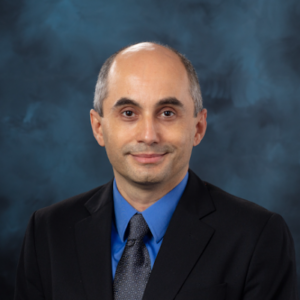
Burak Ozpineci
Corporate Fellow and the Section Head of the Vehicle and Mobility Systems Research
Oak Ridge National Laboratory
Topic: Electric Drive Technologies for Commercial Vehicles
- NEXTDRIVE Project: Reliable Long-Life Electric Drive Systems
- Electric drives for commercial vehicles vs passenger vehicles
- AI and Digital Twin Integration
- Motor AI for Advanced Design
Biography
Burak Ozpineci earned his B.S. degree in electrical engineering from Orta Dogu Technical University, Ankara, Turkey, in 1994. He then completed his M.S. and Ph.D. degrees in electrical engineering at the University of Tennessee, Knoxville, in 1998 and 2002, respectively. Since 2001, he has been with Oak Ridge National Laboratory, where he began as a student and has held positions as a researcher, founding group leader of the Power and Energy Systems Group, group leader of the Power Electronics and Electric Machinery Group. He currently serves as a Corporate Fellow and the Section Head of the Vehicle and Mobility Systems Research Section. Additionally, he has a joint faculty appointment with The University of Tennessee. Dr. Ozpineci is a Fellow of IEEE.

Gregory Ratcliff
Chief Innovation Officer
Vertiv
Topic: Advancing Wide Bandgap Power Electronics: SiC and GaN Innovations for Next-Generation Energy Systems
- Today’s Architectures
- Future Architectures
- Challenges vs. Benefits
- Market Adoption & Future Gazing
Biography
Currently, Greg serves as Chief Innovation Officer for Vertiv. Greg leads a team of technology scouts and business experts who identify, evaluate, and assess the future potential of new technologies, business models, and processes to address evolving business, economic and social trends for Vertiv and its customers. Among his career highlights at Vertiv, he led the global advanced analytics group for the services team, specializing in real-time data and connecting Vertiv’s nearly 1 billion operating products to the Vertiv cloud. Greg participates in international technology standards bodies, has multiple industry-article contributions to his credit, and advises technology incubators. Greg serves on the boards of several startup companies and represents the industry in four academic organizations. Additionally, Greg holds five patents.
Greg’s educational background includes ABD at Liberty University, focusing on Agile project management of IoT and Big Data projects; an MBA from the University of Phoenix; and undergraduate degrees in Applied Mathematics and Information Technology. Greg was named 2020 Technology Executive of the Year in Comspark’s Central Ohio Tech Power Player Awards. He is also a licensed commercial pilot and an avid cyclist.
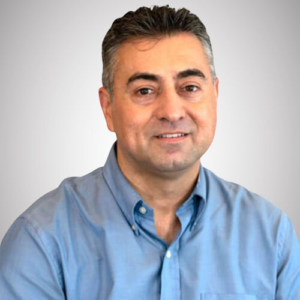
Victor Veliadis
Executive Director and CTO
PowerAmerica
Topic 1: SiC Fabrication in a Si Fab
- SiC material properties for power devices and applications
- SiC specific fabrication technology: Etch, Implantation, metallization and ohmic contact formation, gate oxide processing
- Edge termination techniques
Topic 2: WBG Bidirectional Switches
- Introduction to WBG bidirectional switches and applications
- Lateral GaN bidirectional switches with dual-gate configuration
- Vertical SiC bidirectional switch concepts
- Bidirectional DC circuit breakers
Topic 3: SiC Planar and Trench MOSFETs
- Components of MOSFET resistance
- Planar and Trench configurations
- Trench MOSFET Gate-oxide protection designs
- Trench fabrication specifics
Topic 4: Basal Plane Dislocation Impact on SiC Transistor Performance
- Effect of defects on chip area and yield
- BPD generation, propagation, and expansion
- BPD induced electrical characteristic degradation
- Recovery of BPD related damage by annealing
Biography
Dr. Victor Veliadis is Executive Director & CTO of PowerAmerica, a member-driven Manufacturing USA Institute of industry, universities, and national labs accelerating the commercialization of energy efficient silicon carbide and gallium nitride power semiconductor chips and electronics. At PowerAmerica, he has managed a budget of $156 million, which he strategically allocated to over 210 industrial and university projects to catalyze SiC and GaN semiconductor and power electronics manufacturing, workforce development, and job creation. His PowerAmerica educational activities have trained 430 full-time university students in collaborative industry-university wide bandgap (WBG) projects, and engaged over 7500 attendees in tutorials, short courses, and webinars. Since 2024, Dr. Veliadis has been managing a $64M DOE renewal to further catalyze WBG power technologies.
Dr. Veliadis is a professor at NC State University’s Department of Electrical and Computer Engineering, an IEEE Fellow, a National Academy of Inventors (NAI) Fellow, and an IEEE EDS Distinguished Lecturer. He has 27 issued U.S. patents, 13 book chapters, one co-edited book, and 165 peer-reviewed publications to his credit. He has delivered over 230 keynote/tutorial/invited presentations, including keynotes at ICSCRM, ECSCRM, APEC, ECCE, ECPE, IFWS, WiPDA USA, WiPDA Asia, ICAE, ESSDERC, IECON, and EDTM. Prior to entering academia and taking an executive position at Power America in 2016, Dr. Veliadis spent 21 years post-Ph.D. in the semiconductor industry, where his work included design, fabrication, and testing of SiC devices, GaN devices for radar systems, and financial and operations management of a commercial semiconductor fab. He has received military training in the Army Infantry and is a third-degree black belt in Shotokan karate. Dr. Veliadis earned a Ph.D. in Electrical Engineering from Johns Hopkins University (1995).